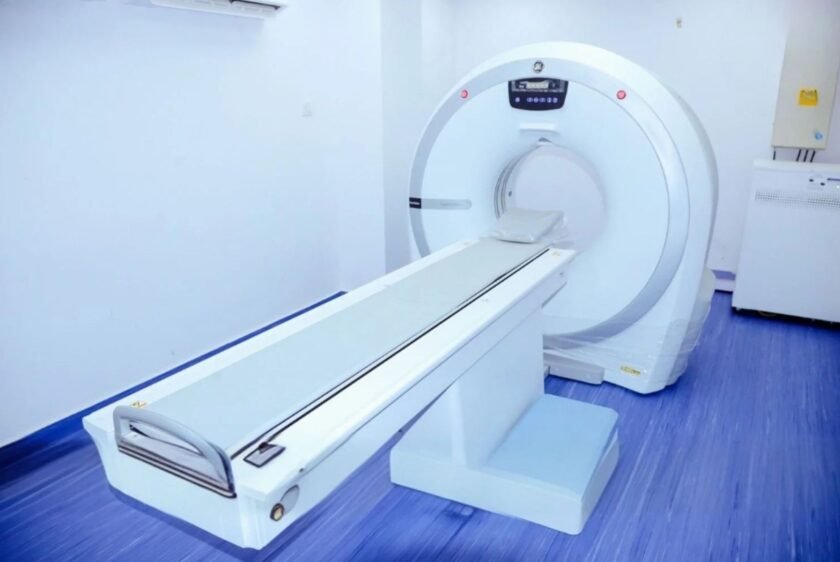
A CT scan in Hyderabad is an important diagnostic imaging test used by doctors to examine different parts of the body in greater detail. CT, or computed tomography, combines multiple X-ray images to create detailed cross-sectional images of internal organs, bones, blood vessels and soft tissues. Doctors may recommend a CT scan when they need more information than a standard X-ray can provide.
For patients searching for a CT scan centre in Hyderabad, CT scan near me, 24×7 CT scan in Hyderabad, or an emergency CT scan centre, it is important to understand when this investigation may be recommended and what patients can expect during the procedure.
Humanity Hospital in Hyderabad provides diagnostic and healthcare services, including 24×7 CT scan services, making CT imaging available for patients who may require urgent diagnostic evaluation.
What Is a CT Scan?
A CT scan is an advanced imaging procedure that uses X-rays and computer technology to produce detailed images of structures inside the body. Unlike a conventional X-ray, which produces a two-dimensional image, CT imaging can provide multiple cross-sectional views.
These images can help doctors examine areas such as the:
- Brain
- Chest
- Abdomen
- Pelvis
- Spine
- Bones and joints
- Blood vessels
- Internal organs
Depending on the patient’s symptoms and medical condition, a doctor may recommend a CT scan as part of the diagnostic process.
When Is a CT Scan Recommended?
A CT scan in Hyderabad may be recommended for several medical reasons. The decision is generally based on the patient’s symptoms, medical history, physical examination and the information the doctor needs.
CT scans can be useful when doctors need detailed imaging to investigate an injury, sudden symptoms, suspected disease or an abnormality found during another examination.
Some common situations in which a CT scan may be considered include trauma, severe headaches, abdominal pain, chest symptoms, suspected infections, certain cancers and problems involving bones or internal organs.
A CT scan is not automatically required for every health problem. The treating doctor determines whether the potential diagnostic benefit justifies the examination.
CT Scan for Head Injuries
Head injuries are one of the important situations in which CT imaging may be used.
Following a significant injury to the head, doctors may need to check for conditions such as bleeding inside the skull, skull fractures or swelling. A CT scan can provide detailed images that help medical professionals evaluate the injury.
If a person experiences a serious head injury followed by symptoms such as loss of consciousness, repeated vomiting, confusion, severe headache, unusual drowsiness or neurological changes, urgent medical assessment is important.
In emergency situations, access to a 24×7 CT scan centre in Hyderabad can help doctors obtain diagnostic imaging when clinically necessary.
CT Scan for Severe Headache
Most headaches are not caused by serious conditions. However, certain headache patterns can require urgent medical evaluation.
A doctor may consider CT imaging when a headache is sudden and extremely severe, follows significant trauma, occurs with neurological symptoms or is associated with other concerning signs.
For example, sudden weakness, difficulty speaking, loss of consciousness, confusion or vision changes alongside a severe headache should receive immediate medical attention.
The doctor decides whether a CT scan, MRI or another investigation is most appropriate.
CT Scan After an Accident or Trauma
Accidents can cause injuries that are not immediately obvious. CT imaging can help doctors examine internal structures following significant trauma.
Depending on the type of injury, doctors may use CT scans to assess the head, spine, chest, abdomen, pelvis or bones.
Patients involved in road accidents, falls or other significant injuries may require emergency evaluation even if they initially feel relatively well.
An emergency CT scan in Hyderabad may be recommended when rapid imaging is clinically necessary.
CT Scan for Chest Problems
CT imaging can provide detailed views of the lungs, chest structures and surrounding tissues.
A doctor may recommend a chest CT when investigating certain abnormalities that require more detailed imaging than a conventional chest X-ray can provide.
Depending on the clinical situation, CT imaging may help evaluate conditions involving the lungs, chest injuries, suspected blood clots or other abnormalities.
Patients should not self-diagnose based on imaging terminology. CT findings need to be interpreted alongside symptoms, medical history and other investigations by a qualified healthcare professional.
CT Scan for Abdominal Pain
Persistent or severe abdominal pain can have many possible causes. Depending on the symptoms and physical examination, a doctor may recommend CT imaging to investigate the abdomen and pelvis.
A CT scan may help doctors evaluate certain problems involving organs such as the liver, kidneys, pancreas, intestines and other abdominal structures.
However, not everyone with abdominal pain requires a CT scan. The appropriate investigation depends on the suspected cause and the patient’s circumstances.
If abdominal pain is severe or accompanied by symptoms such as persistent vomiting, fainting, significant bleeding, high fever or severe weakness, urgent medical assessment may be necessary.
CT Scan for Kidney Stones
CT imaging can be used in the evaluation of suspected kidney stones in appropriate patients. A doctor may recommend imaging based on the patient’s symptoms, medical history and examination.
Kidney stone symptoms can include severe pain in the side or back, pain that moves toward the lower abdomen or groin, nausea, vomiting or blood in the urine.
If symptoms are severe or accompanied by fever, difficulty passing urine or significant weakness, medical attention should not be delayed.
CT Scan for Bone and Joint Injuries
Although standard X-rays are commonly used to evaluate fractures, CT scans can provide additional detail in certain complicated injuries.
CT imaging may be considered for complex fractures involving areas such as the spine, pelvis or joints. Detailed images can help doctors understand the location and extent of an injury and plan appropriate treatment.
An orthopedic specialist or emergency doctor can determine whether CT imaging is necessary following an injury.
CT Scan for Internal Bleeding
One important use of CT imaging in emergency medicine is evaluating possible internal injuries or bleeding.
Following significant trauma, a patient may have internal injuries even when there are no obvious external wounds. Depending on the situation, doctors may use CT imaging to assess internal organs and other structures.
This is one reason emergency departments need access to appropriate diagnostic facilities when treating serious injuries.
CT Scan for Suspected Tumors and Cancer
CT scans can also be used as part of the investigation and management of certain cancers.
Depending on the type of cancer, CT imaging may help doctors identify abnormalities, assess the location and size of a lesion, examine nearby structures or monitor changes during treatment.
A CT scan alone does not necessarily establish a cancer diagnosis. Doctors may require additional tests, laboratory investigations, biopsies or other imaging studies.
Patients should discuss their individual results with their treating doctor rather than interpreting a CT report independently.
CT Scan for Infections and Inflammation
Certain infections and inflammatory conditions may require detailed imaging when symptoms or other tests raise concern.
For example, doctors may use CT imaging to investigate complicated infections involving the chest or abdomen or to evaluate collections of fluid or other abnormalities.
The decision depends on the patient’s clinical condition and the information required to make an appropriate diagnosis.
CT Scan With Contrast
Some CT scans are performed with a contrast agent to make particular structures more visible.
Contrast may be used for specific examinations involving blood vessels, organs or other tissues. Whether contrast is required depends on the purpose of the scan.
Before a contrast-enhanced CT, patients should tell the healthcare team about relevant medical history, previous reactions to contrast material and any known kidney problems. The imaging team can then determine the appropriate approach.
Patients should always follow the preparation instructions provided by the hospital or diagnostic centre.
Is a CT Scan Painful?
A standard CT scan is generally a painless procedure. The patient usually lies on a table that moves through the CT scanner.
It is important to remain still during image acquisition because movement can affect image quality.
If contrast is required, the contrast agent may be administered according to the type of examination. Some patients may briefly notice sensations such as warmth or a metallic taste, depending on the contrast used.
The healthcare team will explain the procedure before the scan.
How Long Does a CT Scan Take?
The duration of a CT examination can vary depending on the body part being scanned, the type of examination and whether contrast is required.
The actual image acquisition may be relatively quick, although the overall appointment can take longer because of registration, preparation, positioning and post-scan instructions.
Emergency CT examinations may be prioritized according to the patient’s medical condition.
How Should You Prepare for a CT Scan?
Preparation depends on the type of CT scan.
Some examinations require no special preparation, while others may involve fasting or other instructions. Patients should follow the specific instructions provided by their doctor or diagnostic centre.
Before the scan, inform the medical team about:
- Current medications
- Allergies or previous reactions to contrast
- Kidney problems
- Pregnancy or possible pregnancy
- Previous relevant medical conditions
- Any other information requested by the imaging team
Providing accurate information helps the healthcare team determine the safest and most appropriate examination.
CT Scan During Pregnancy
Because CT imaging uses X-rays, pregnancy or possible pregnancy should always be discussed with the healthcare provider before the examination.
A CT scan may sometimes be medically necessary during pregnancy, particularly when there is an urgent health concern. Doctors consider the potential benefits and risks and choose the most appropriate imaging method for the situation.
Patients should never avoid medically necessary care without discussing their concerns with their doctor.
CT Scan vs X-Ray: What Is the Difference?
Both X-rays and CT scans use X-rays to create images, but they provide different levels of information.
A conventional X-ray generally produces a relatively simple two-dimensional image. A CT scan produces multiple cross-sectional images that can provide much more detailed information about internal structures.
This does not mean CT is always better. The appropriate imaging test depends on the patient’s symptoms and the clinical question the doctor needs to answer.
CT Scan vs MRI
CT and MRI are different imaging technologies.
CT uses X-rays, while MRI uses magnetic fields and radio waves. MRI can provide excellent images of certain soft tissues, while CT can be particularly useful in emergency situations, trauma and evaluation of bones and other structures.
The choice between a CT scan and MRI depends on the body part being examined, the suspected condition, urgency and other patient-specific factors.
A doctor or radiologist can recommend the most appropriate examination.
Why Choose a 24×7 CT Scan Centre in Hyderabad?
Medical problems can occur at any time. Accidents, sudden neurological symptoms, severe abdominal pain and other emergencies may happen outside normal outpatient hours.
Access to 24×7 CT scan services in Hyderabad can therefore be valuable when a doctor determines that urgent imaging is necessary.
Humanity Hospital provides 24×7 CT scan services in Hyderabad along with other diagnostic and healthcare services. This can be useful for patients who require diagnostic evaluation as part of emergency or hospital-based care.
CT Scan Near Me in Hyderabad
When searching for a CT scan near me in Hyderabad, patients should look beyond distance alone.
Important factors to consider include:
- Availability of the required CT examination
- Emergency or 24×7 availability when needed
- Qualified radiology professionals
- Appropriate diagnostic equipment
- Clear preparation instructions
- Medical supervision
- Availability of related healthcare services
- Accessibility from your location
If the CT scan is being performed because of an emergency, the nearest appropriate emergency medical facility may be more important than travelling a longer distance to a preferred diagnostic centre.
What Happens After a CT Scan?
After the scan, the images are reviewed by an appropriate medical professional, such as a radiologist. The findings are generally provided in a report that is then interpreted by the treating doctor in the context of the patient’s symptoms and medical history.
A CT report may contain technical medical terminology that can be difficult for patients to understand. Patients should discuss the results with their doctor rather than assuming that a particular finding automatically represents a serious disease.
Further tests or treatment may or may not be required depending on the findings.
When Should You Seek Emergency Medical Care?
A CT scan is a diagnostic test, not a treatment for an emergency. If you have potentially serious symptoms, seek medical attention rather than simply searching online for a diagnostic centre.
Emergency evaluation may be appropriate for symptoms such as:
- Sudden severe headache
- Serious head injury
- Major accident or trauma
- Severe unexplained abdominal pain
- Sudden neurological changes
- Severe breathing difficulty
- Chest pain with concerning symptoms
- Loss of consciousness
- Significant bleeding
- Severe weakness or confusion
In such situations, doctors can determine whether CT imaging or another emergency investigation is necessary.
Conclusion
A CT scan in Hyderabad can provide detailed information that helps doctors investigate injuries, abdominal problems, chest conditions, neurological symptoms, kidney stones, bone injuries and various other medical concerns. However, CT imaging is not required for every symptom, and the decision should be made by a qualified healthcare professional based on the patient’s individual circumstances.
If you are looking for a CT scan centre in Hyderabad, CT scan near me, 24×7 CT scan in Hyderabad, emergency CT scan centre or diagnostic centre near Mehdipatnam, it is important to choose a facility that can provide the appropriate diagnostic service and medical support.
Humanity Hospital offers 24×7 CT scan services in Hyderabad along with multispeciality healthcare, emergency care and other diagnostic facilities. Patients can consult their doctor to understand whether a CT scan is appropriate for their symptoms and which type of imaging is required.


 English