
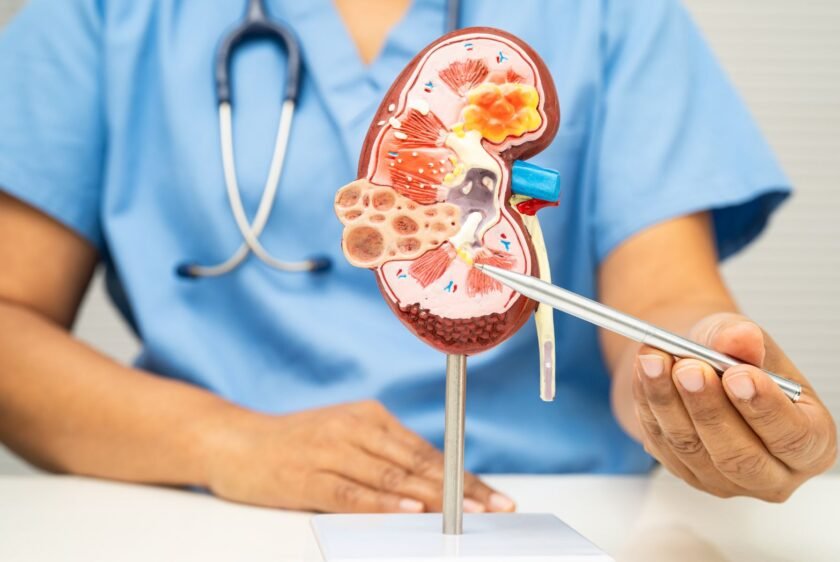
Kidney stones are a common urinary system problem that can cause sudden and intense pain. They develop when certain minerals and salts in the urine become concentrated and form hard crystals inside the kidneys. Small kidney stones may pass naturally, while larger stones can become stuck in the urinary tract and require medical treatment.
Recognizing kidney stone symptoms early can help you seek appropriate care before complications develop. Severe pain, blood in the urine, vomiting, difficulty urinating, fever, or chills may require prompt medical evaluation. If you are experiencing recurring kidney stones or persistent urinary symptoms, consulting a urologist or kidney specialist can help determine the underlying cause and suitable treatment.
What Are Kidney Stones?
Kidney stones, also called renal calculi, are solid deposits that form inside the kidneys. They can vary considerably in size, from tiny crystals that pass unnoticed to larger stones that can obstruct the urinary tract.
Kidney stones may develop because of concentrated urine, inadequate fluid intake, dietary factors, certain medical conditions, or a family tendency to form stones. A stone can remain in the kidney without causing symptoms, but pain may occur when it moves into the ureter—the tube that carries urine from the kidney to the bladder.
The symptoms and treatment depend on factors such as the stone’s size, location, composition, and whether it is blocking urine flow.
Common Kidney Stone Symptoms
Understanding the common symptoms of kidney stones can help you recognize when medical attention may be necessary.
1. Severe Pain in the Side or Back
One of the most recognizable symptoms is intense pain in the back, side, or below the ribs. Kidney stone pain may come in waves and can change in intensity as the stone moves through the urinary tract.
The pain may sometimes spread toward the lower abdomen or groin. Some people describe it as sharp, cramping, or extremely uncomfortable.
2. Pain That Moves Toward the Groin
As a kidney stone travels down the ureter, discomfort can move from the side or back toward the lower abdomen and groin. This changing location of pain can occur because the stone is moving through the urinary tract.
Persistent or severe pain should not be ignored, particularly when it is accompanied by urinary or other symptoms.
3. Blood in the Urine
Kidney stones can irritate the lining of the urinary tract and cause blood to appear in the urine. Urine may look pink, red, or brown, although blood may sometimes only be detected through laboratory testing.
Blood in urine should always be medically evaluated, because kidney stones are only one possible cause.
4. Frequent Urination
A kidney stone located near the bladder may create a frequent or urgent need to urinate. You may feel that you need to use the bathroom more often than usual, even when only a small amount of urine is produced.
5. Burning or Pain While Urinating
Pain or burning during urination can occur when a stone moves through the urinary tract. However, these symptoms can also be caused by urinary tract infections and other conditions.
If burning urination occurs together with fever, chills, severe pain, or difficulty passing urine, prompt medical assessment is important.
6. Nausea and Vomiting
Severe kidney stone pain can trigger nausea and vomiting. These symptoms can make it difficult to drink enough fluids, potentially contributing to dehydration.
If vomiting is persistent or you cannot keep fluids down, seek medical attention.
7. Cloudy or Unusual-Smelling Urine
Cloudy or strong-smelling urine can sometimes occur with urinary tract problems. If these symptoms appear with fever, chills, pain, or urinary difficulty, an infection should be considered and evaluated by a healthcare professional.
What Causes Kidney Stones?
Kidney stones can have several causes. They often develop when substances in urine become highly concentrated and crystallize.
Factors that may increase the risk include:
- Not drinking enough water
- A previous history of kidney stones
- Family history of kidney stones
- High intake of certain foods or nutrients in susceptible individuals
- Obesity or metabolic factors
- Certain digestive or metabolic conditions
- Some medications
- Recurrent urinary problems
- Certain abnormalities of the urinary tract
The exact cause can differ from one person to another. People who repeatedly develop stones may benefit from an evaluation to identify preventable risk factors.
When Should You See a Kidney Stone Specialist?
Not every kidney stone requires a procedure, but some situations require specialist evaluation.
You should consider consulting a urologist if you have:
- Severe or recurring kidney stone pain
- A kidney stone that does not pass
- Repeated episodes of kidney stones
- Blood in the urine
- Difficulty passing urine
- A suspected large kidney stone
- Recurrent urinary infections
- Kidney stones affecting normal urinary flow
- Symptoms that continue despite initial treatment
A specialist can determine the stone’s size and location and recommend whether observation, medication, or a procedure is appropriate.
When Is Kidney Stone Pain an Emergency?
Some kidney stone symptoms require urgent medical attention.
Seek urgent medical care if kidney stone symptoms are accompanied by:
- Fever or chills
- Severe or worsening pain
- Persistent vomiting
- Difficulty or inability to urinate
- Significant weakness or dehydration
- Blood in the urine
- Signs of infection
A stone that blocks urine flow while an infection is present can become a serious medical problem. This is why severe urinary symptoms combined with fever or chills should not be managed at home without medical evaluation.
How Are Kidney Stones Diagnosed?
A doctor may use your symptoms, medical history, physical examination, urine testing, blood tests, and imaging to evaluate a suspected kidney stone.
Urine Tests
A urine test can help identify blood, signs of infection, or certain substances associated with stone formation.
Blood Tests
Blood testing may help evaluate kidney function and identify certain abnormalities that can contribute to stone formation.
Ultrasound
An ultrasound may be used to examine the kidneys and urinary tract. It does not use ionizing radiation and can be particularly useful in certain situations.
CT Scan
A CT scan can provide detailed images of the urinary tract and may help identify the size and location of a stone. CT imaging is commonly considered when detailed evaluation is needed, particularly in acute situations.
The appropriate imaging test depends on the patient’s symptoms, age, medical history, and clinical circumstances.
Kidney Stone Treatment Options
Kidney stone treatment depends on the size and location of the stone, symptoms, urinary obstruction, infection, kidney function, and other individual factors.
Drinking Fluids and Observation
Small stones may pass naturally through the urinary tract. A healthcare professional may recommend adequate fluid intake and monitoring when appropriate.
However, drinking excessive amounts of water does not necessarily make a large obstructing stone pass and can be inappropriate in some medical situations. Follow the advice of your healthcare provider.
Medicines for Pain
Pain-relieving medicines may be recommended to manage kidney stone pain. The choice of medicine depends on your health, kidney function, other medications, and medical history.
Medicines to Help Stone Passage
In selected cases, a doctor may prescribe medication that can help relax the ureter and potentially assist the passage of a stone. Such treatment is not appropriate for every stone, so medical evaluation is important.
Shock Wave Lithotripsy
Shock wave lithotripsy uses focused energy to break certain kidney stones into smaller pieces that can then pass through the urinary tract.
Whether this treatment is suitable depends on factors such as the stone’s size, location, composition, and the patient’s overall health.
Ureteroscopy
During ureteroscopy, a specialist uses a thin instrument to access the urinary tract and locate the stone. The stone may be removed or broken into smaller fragments using appropriate equipment.
This can be an effective treatment for stones that are unlikely to pass naturally or are causing significant problems.
Surgical Treatment
Some larger, complicated, or difficult-to-treat stones may require a surgical procedure. The appropriate approach depends on the size, position, and complexity of the stone.
A urologist can explain the available options after reviewing imaging and other test results.
Can Kidney Stones Be Prevented?
People who have had kidney stones may have a higher risk of developing them again. Prevention usually focuses on maintaining appropriate hydration and addressing individual risk factors.
Stay Properly Hydrated
Adequate fluid intake is one of the most important measures for many people who are prone to kidney stones. Water helps dilute substances in urine that can contribute to crystal formation.
Your individual fluid needs may vary depending on your health, climate, physical activity, and medical conditions.
Follow a Balanced Diet
Dietary recommendations depend on the type of stone and the person’s individual risk factors. A healthcare professional may recommend adjustments involving sodium, animal protein, calcium, oxalate, or other dietary components.
It is generally better to avoid making major dietary restrictions without knowing the type of stone or receiving professional advice.
Investigate Recurrent Stones
If kidney stones keep returning, your doctor may recommend additional testing, including analysis of a passed or removed stone and, in selected patients, evaluation of urine composition.
Understanding why kidney stones are forming can help develop a more personalized prevention plan.
Kidney Stones in Men and Women
Kidney stones can affect both men and women. The symptoms can be similar, including flank pain, urinary symptoms, nausea, and blood in the urine.
However, urinary symptoms in women can sometimes resemble a urinary tract infection, while other abdominal or pelvic conditions can cause similar pain. Proper diagnosis is therefore important rather than assuming every episode of pain is caused by a kidney stone.
Kidney Stones During Pregnancy
Kidney stone symptoms during pregnancy require careful medical evaluation. Imaging and treatment decisions may differ during pregnancy because the health of both the mother and baby must be considered.
Pregnant women with severe abdominal or flank pain, fever, vomiting, blood in urine, or difficulty urinating should contact their healthcare provider promptly rather than attempting self-treatment.
Why Specialist Evaluation Matters for Recurrent Kidney Stones
A single small kidney stone may pass without a procedure, but recurrent stones deserve greater attention. Repeated stone formation can sometimes indicate an underlying dietary, metabolic, genetic, or urinary tract factor.
A urologist can evaluate the stone’s location and determine whether intervention is needed. Depending on the situation, other healthcare professionals may also help with dietary or metabolic risk-factor management.
Early evaluation can help prevent complications and provide a clearer plan for managing future episodes.
Kidney Stone Treatment and Diagnostic Care in Hyderabad
People searching for kidney stone treatment in Hyderabad, a urologist in Hyderabad, or a multispeciality hospital near Mehdipatnam should consider a healthcare facility that can provide appropriate consultation, diagnostic testing, and specialist care under one roof.
Humanity Hospital in Hyderabad provides multispeciality healthcare with diagnostic services and specialist departments. Its services include advanced laboratory testing, ultrasonography, ECG, 2D Echo, digital X-ray, physiotherapy and rehabilitation, and 24×7 CT scan services. For patients with severe symptoms, the hospital also provides 24×7 emergency care.
When choosing where to seek care for suspected kidney stones, the most important consideration is appropriate medical assessment and access to the diagnostic and specialist services your condition requires.
Frequently Asked Questions About Kidney Stones
What is the most common symptom of a kidney stone?
Severe pain in the side or back that may move toward the abdomen or groin is one of the most common symptoms. Blood in the urine, nausea, vomiting, urinary urgency, and painful urination may also occur.
Can a kidney stone go away on its own?
Some small kidney stones can pass naturally. The likelihood depends on the stone’s size and location. A doctor can assess whether observation is reasonable or whether treatment is required.
How do I know if kidney stone pain is serious?
Severe or worsening pain, fever, chills, persistent vomiting, inability to urinate, or significant blood in the urine warrants prompt medical assessment. Fever or chills with suspected obstruction can be particularly concerning.
Should I see a urologist for kidney stones?
A urologist is appropriate when a stone is large, does not pass, causes recurring symptoms, blocks urine flow, or requires a procedure. Recurrent kidney stones may also warrant specialist evaluation to reduce future risk.
Can kidney stones come back after treatment?
Yes. Having one kidney stone can increase the risk of developing another. Hydration, appropriate dietary changes, and evaluation of underlying risk factors can help reduce recurrence in many patients.


 English